Case note · Anonymized
Bad → High in Eight Weeks
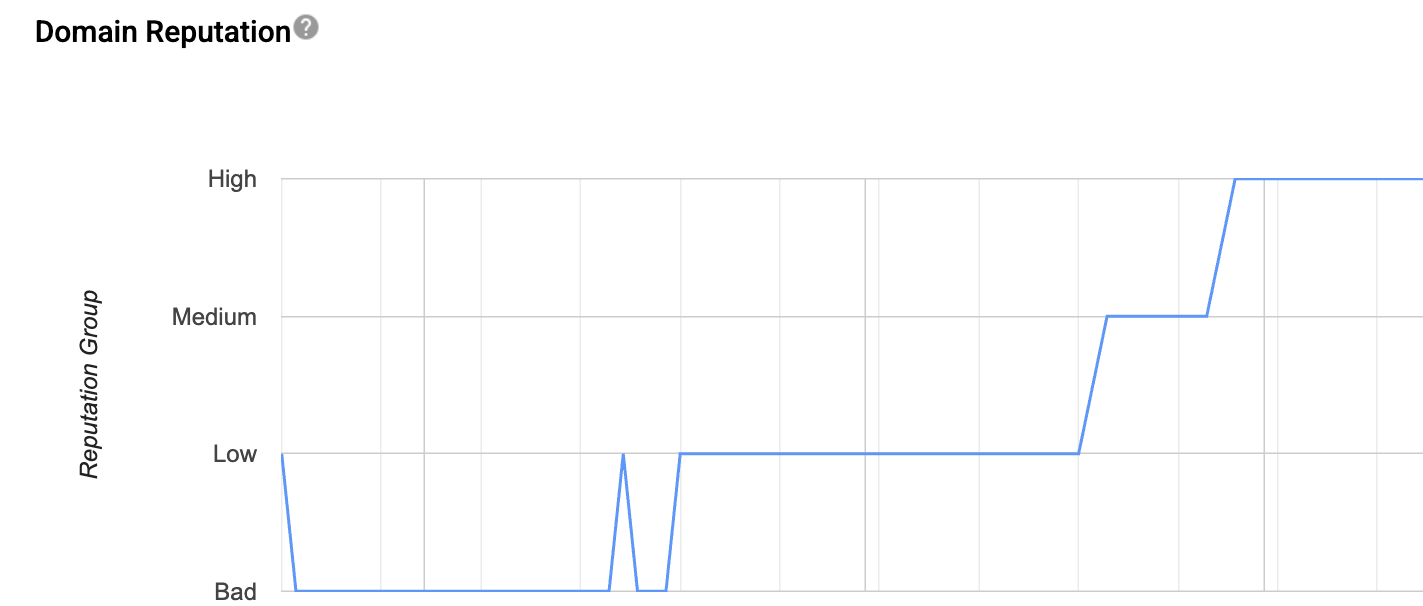
Google Postmaster, domain reputation. Client domain anonymized.
This is the curve people ask me about most. A DTC brand came to me with Gmail open rates in single digits and a Postmaster reputation of Bad. Eight weeks later the domain sat at High. Here's what actually happened in between — because the interesting part is the section where nothing moves.
The situation
The brand had watched open rates slide from healthy to under 10% over roughly two months. By the time they reached out, nearly every campaign was landing in spam. The team's instinct had been to send more — bigger promos, more urgency, full-list blasts — which is the natural reaction and also exactly the wrong one. Each desperate send dug the hole deeper.
What the audit found
Three problems, in order of damage:
- No engagement segmentation. Every campaign went to the full list, including subscribers who hadn't opened in six months. Complaint and ignore signals compounded daily.
- Broken DKIM alignment. Authentication "passed" everywhere — but the DKIM signature was in the ESP's domain, not theirs. DMARC was surviving on one leg. (Pass ≠ aligned — the most common gap I find, and it shows up in your DMARC reports long before it shows in open rates.)
- Escalating volume as performance dropped. Gmail read this as: a sender people don't want, sending ever harder.
What we did
Week 1 — stop the bleeding. Sending cut to the 30-day engaged segment only. Volume dropped by roughly 80%. DKIM alignment fixed, custom bounce domain configured. All promotional blasts frozen; the only mail going out was high-value content to people who demonstrably wanted it.
Weeks 2–4 — the plateau. This is the part nobody warns you about. Three weeks in, the curve still said Bad. The client asked, reasonably, whether any of it was working. It was — reputation is a trailing indicator, and Gmail was still scoring the domain on its recent past. The plateau isn't evidence of failure. The plateau is the work.
Weeks 5–8 — the turn. Bad → Low, then Low → Medium noticeably faster, then Medium → High faster still. As each step landed, we widened the engagement window — 30-day to 60-day to 90-day — and watched complaint rate after every expansion. Open rate followed reputation step for step: under 10% at Bad, 10–20% at Low, 20–35% at Medium, and 35–55% once High held.
What I take from this case
- Bad → Low is the hardest gap. Not because the tactics differ — they're the same tactics — but because it's the longest stretch with no visible reward. Most senders quit there, or panic and blast the full list, resetting the clock.
- Each step up is faster than the last. Reputation compounds in both directions. The same patience that feels unbearable at Bad starts paying visibly at Medium.
- Volume is a lever, not a constant. Cutting volume 80% felt like giving up revenue. It was actually buying back the ability to earn revenue from email at all.
The methodology behind each level is in the domain reputation guide. And for what "High" looks like once you have to maintain it, see the follow-up case note.
Discuss
Recognize your own curve in this one? Disagree with the read? Email me — ohmysendcom@gmail.com. I read everything.
Want me to run this recovery with you? Here's how that works.